

The Chinese calligraphy brush is one of the oldest writing and painting instruments in continuous use. For over two thousand years, artists and scholars across China, Japan, and Korea have used essentially the same tool design: a pointed bundle of natural hair attached to a bamboo or wooden handle. The simplicity of the design belies its extraordinary versatility. A single brush can produce strokes thinner than a needle or broader than your thumb, depending on the pressure and angle the artist applies.
What makes the Chinese brush particularly interesting for modern artists is that it bridges calligraphy and painting naturally. The same tool that writes exquisite characters also creates beautiful watercolor effects. For artists who want to explore both disciplines, a quality Chinese brush is an essential addition to the toolkit.
The brush tip is the heart of the tool. Unlike Western brushes that come in many shapes (round, flat, filbert, fan), Chinese brushes are almost always round with a pointed tip. The magic lies in the hair composition, which determines the brush’s personality.
Traditionally made from bamboo, though modern brushes also use wood, plastic, or porcelain. The handle is longer than a Western brush or pen handle, which allows the calligrapher to hold it vertically (a traditional requirement for proper Chinese calligraphy posture). The longer handle also provides a wider range of movement from the shoulder and elbow rather than the wrist.
Where the hair meets the handle. In quality brushes, this junction is securely bound and sealed. Loose ferrules cause hair shedding and eventually brush failure. When buying a brush, check that the hair feels firmly attached.
Artists who already use watercolor brushes will notice significant differences when picking up a Chinese brush for the first time.
Western watercolor brushes come in many shapes optimised for specific tasks: round brushes for general work, flat brushes for washes, rigger brushes for fine lines. A Chinese brush is always round and pointed, but it achieves all these effects through technique. Press the full belly for broad strokes, use only the tip for fine lines, drag the side for dry textures.
Most Chinese brushes use softer hair than typical Western watercolor brushes. A natural hair Western brush like a kolinsky sable is relatively springy and firm. A Chinese goat hair brush is significantly softer. This softness requires a different approach to stroke-making: more deliberate, more reliant on arm movement rather than wrist control.
Chinese brushes, particularly goat hair and mixed hair varieties, hold more liquid than comparably sized Western brushes. The hair is bundled in a way that creates a reservoir in the belly of the brush. This is essential for calligraphy, where you need smooth, uninterrupted strokes without re-dipping mid-character.
The traditional grip is fundamentally different from how Western pens and brushes are held.
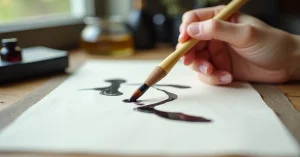
Holding the brush vertically allows the tip to contact the paper at different angles depending on pressure and direction, producing the full range of stroke widths. It also forces you to use larger muscle groups (arm, shoulder) rather than small finger muscles, which produces smoother, more confident strokes and reduces fatigue during long writing sessions.
When using a Chinese brush for watercolor painting rather than strict calligraphy, you can hold it at an angle similar to a Western brush. This is perfectly acceptable and gives you the fluid, expressive mark-making that makes Chinese brushes appealing for painting, without the strict posture requirements of formal calligraphy.
Chinese calligraphy is built on fundamental strokes that combine to form characters. Mastering these strokes is the foundation of all Chinese calligraphy practice.
Traditionally, the character ‘yong’ (meaning ‘eternity’) contains all eight basic strokes of Chinese calligraphy. Practising this single character teaches every fundamental movement:
Each stroke has a specific beginning (entering the paper), a body (the main movement), and an ending (leaving the paper). This deliberate start-travel-finish structure is what gives Chinese calligraphy its distinctive beauty and rhythm.
Pre-made sumi ink is the most convenient option. It is a dense, carbon-based black ink that produces beautiful, archival-quality marks. Available in different grades from practice-quality to exhibition-quality. For beginners, practice-grade bottled sumi ink is perfectly adequate and affordable.
Traditional calligraphy uses an ink stick ground on an ink stone with water. This process is meditative and gives the calligrapher complete control over ink density. Grinding your own ink is a calming pre-practice ritual that centres the mind. However, it adds significant time to each session.
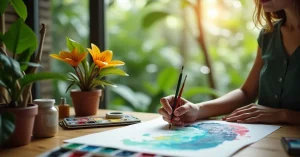
Chinese brushes work beautifully with watercolor paint, both for calligraphic lettering and for painting. The natural hair absorbs watercolor well and releases it smoothly. Using watercolor opens up the entire spectrum of colour for calligraphic expression.
This is where Chinese brushes truly shine for artists who want versatility. The same brush that creates calligraphy characters can produce stunning watercolor effects.
Chinese brushes excel at loose, gestural watercolor work. The soft, responsive tip creates marks with character and variation that synthetic or firm Western brushes cannot replicate. For floral painting, figure sketching, and abstract work, the Chinese brush adds an organic, spontaneous quality.
The large ink capacity of Chinese brushes (especially goat and mixed-hair) makes them excellent for wet-on-wet techniques and broad washes. The soft hair blends colours smoothly on the paper surface. For large-area work, a Chinese brush can rival or exceed a dedicated wash brush in performance.
The pointed tip of a Chinese brush creates incredibly fine lines when used with a light touch. For adding details, branches, whiskers, grass, or architectural lines, the brush transitions seamlessly from broad to fine work without switching tools.
New Chinese brushes come with the hair stiffened by a sizing agent. To prepare the brush for use, soak the tip in room-temperature water for 10-15 minutes until the sizing dissolves and the hair becomes soft. For calligraphy, soak only the tip (about one-third of the hair length). For painting, you can soak the entire hair bundle.
The Chinese brush occupies a unique position as a tool that serves both writing and painting equally well. For artists interested in modern calligraphy, traditional Chinese scripts, or expressive watercolor painting, investing in a quality brush opens creative possibilities that no other single tool provides.
The Sicon Chinese Brush TT05 is a reliable mixed-hair option for artists in Sri Lanka looking to explore this versatile tool. Start with basic stroke practice, experiment with pressure and speed, and gradually incorporate the brush into your watercolor work. The more you use it, the more you will appreciate its extraordinary range.

WhatsApp us
 Login with Google