

Dry brush is a watercolor technique where a brush loaded with concentrated paint and minimal water is dragged across textured paper. The bristles skip over the paper’s surface, depositing paint on the raised peaks while leaving the valleys white. The result is a rough, textured mark that suggests surfaces like stone, bark, grass, fabric, and rough water.
Unlike wet-on-wet, which produces soft, diffused effects, dry brush creates hard, broken textures. It is the opposite end of the watercolor spectrum – controlled, textured, and precise where wet-on-wet is loose, smooth, and unpredictable.
Pick up concentrated paint on your brush. The paint should be thick – closer to the consistency straight from the tube rather than diluted. Then, and this is the critical step, wipe most of the paint off the brush. Drag the bristles sideways across a paper towel or cloth until the strokes on the towel appear broken and streaky. The brush should feel almost dry.
For maximum texture, fan the bristles slightly by pressing the brush sideways against the palette or towel. Instead of a neat point, the brush should have separated strands of bristle, each carrying a tiny amount of pigment.
Drag the brush sideways across the paper using light pressure and moderate speed. Do not press hard – the goal is for the bristles to touch only the raised texture of the paper, not the valleys. Hold the brush at a low angle (nearly flat to the paper) rather than perpendicular. The lighter and faster the stroke, the more broken and textured the mark.
Dry brush effects look best when built in multiple passes rather than one heavy application. A single light pass creates a subtle texture. Additional passes over the same area (once the previous layer is dry) create progressively denser, more detailed texture.
Paper texture is essential for dry brush technique. The technique literally depends on the physical peaks and valleys of the paper surface:
Higher paper weight also helps because the paper stays rigid under the light, fast strokes. 300gsm paper provides a firm surface that does not flex or buckle under dry brush application.
For understanding how different brush shapes and hair types affect dry brush marks, experiment on scrap paper with each brush you own.
The most effective watercolor paintings combine wet and dry techniques. Using only wet techniques produces soft, atmospheric paintings lacking crisp detail. Using only dry brush produces hard, scratchy paintings lacking the luminous glow of watercolor. The combination leverages the strengths of both.
This three-stage approach – wet for atmosphere, wet-on-dry for form, dry brush for texture – gives paintings depth and variety that no single technique achieves alone.
If the brush is too wet, the paint fills in the paper valleys and you get a regular wash instead of a broken texture. The fix is always the same: wipe more paint off on the paper towel.
Pressing hard forces the bristles into every valley, eliminating the textured effect. Use the lightest touch possible. Let gravity and the weight of the brush do the work.
Dry brush is an accent technique, not a primary one. A painting that is entirely dry brush looks scratchy and lacks the luminous quality that makes watercolor beautiful. Use dry brush for texture areas and let the wet techniques handle the rest.
On smooth hot press paper, dry brush produces minimal texture because there are no valleys for the brush to skip over. If dry brush is important to your style, use cold press or rough texture paper.
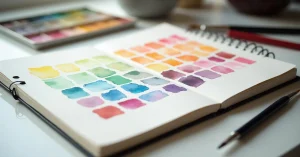
Create a texture sampler sheet:
Yes, but it requires more effort to load concentrated paint from pans. Spray the pan lightly with water, let it sit for a minute, then scrub your brush vigorously on the softened pigment to load a thick concentration. Tube paints are easier for dry brush because you can squeeze out pure, concentrated pigment directly.
Less than for other techniques. In fact, old, slightly worn brushes often produce better dry brush effects than new ones. The splayed, irregular bristles of a used brush create more organic texture. Save your best brushes for wet work and use older or cheaper ones for dry brush.
Vary the direction, pressure, and density of your strokes. Natural textures are irregular – stone does not have uniform horizontal lines. Overlap dry brush passes at different angles. Leave some areas with more white showing and others denser. Randomness is your friend in dry brush.
WhatsApp us
 Login with Google