

Glazing is the technique of applying a thin, transparent layer of watercolor over a completely dry layer beneath. Unlike wet-on-wet where colours blend and diffuse, glazing creates optical colour mixing – light passes through the top layer, hits the layer below, and bounces back through both. This produces rich, luminous colours that are impossible to achieve by direct mixing on the palette.
When you mix blue and yellow paint on a palette, the pigment particles physically combine. The resulting green absorbs certain wavelengths of light. With glazing, you paint a yellow wash, let it dry completely, then paint a transparent blue wash on top. Light now passes through the blue layer, hits the yellow layer, and returns through the blue. Your eye sees both colours simultaneously, creating a green that is often more vibrant and luminous than a palette-mixed equivalent.
This is the same principle that makes stained glass windows glow – multiple transparent layers of colour lit from behind.
The underlying layer must be bone dry before applying a glaze. Not damp, not almost dry – completely dry. If the lower layer is even slightly moist, the glaze will lift and disturb the paint underneath, creating muddy patches instead of clean, luminous layers. In Sri Lanka’s humid climate, drying can take longer than expected. A gentle fan or hair dryer on low heat speeds the process.
Apply your initial wash. This can be a flat wash, gradient, or detailed rendering. Use lighter values than your final target because each glaze layer will darken the overall value.
Wait until the layer is absolutely dry to the touch. Touch the surface gently with the back of your hand – it should feel room temperature, not cool (cool spots indicate residual moisture). In humid conditions, wait at least 15-20 minutes for light washes, longer for heavy applications.
Mix your glazing colour to light-medium dilution. Glazes should be thin and transparent. A heavy, concentrated glaze is just painting over the previous layer. The beauty of glazing comes from subtle, thin applications that allow the underlying colour to show through clearly.
Load a soft brush (a mop or large soft round works best) with the diluted colour. Apply with confident, swift strokes. Do not scrub back and forth – each stroke should lay the colour down without disturbing what is beneath. Work quickly across the area, keeping a wet edge just as you would for a flat wash.
Once a stroke is laid down, do not re-brush it. Every additional stroke over a drying glaze risks lifting the paint below, especially on cellulose paper. If the glaze is uneven, let it dry and apply another glazing layer rather than fixing it wet.
You can apply multiple glaze layers, drying between each. Each layer deepens the colour, shifts the hue, or modifies the value. Professional watercolorists sometimes build 5-10 glaze layers for incredibly rich, complex colour.
Transparent pigments allow maximum light transmission through the layer, producing the most luminous results:
Opaque pigments block light rather than transmitting it, covering the layer below instead of mixing optically with it:
Understanding the colour properties of each pigment helps you predict how each glaze layer will perform.
When you want to make a shadow area darker, mixing more pigment into the wash risks making it look overworked or muddy. A thin glaze of the same colour (or a darker, transparent colour) over the dried base deepens the value while maintaining the clarity and luminosity of the underlying colour.
A warm glaze (diluted burnt sienna or quinacridone gold) over a cool blue landscape shifts the mood towards warmth – useful for sunset effects or atmospheric perspective. Conversely, a cool blue glaze over a warm scene pushes it toward cooler, shadowed mood.
A single, very dilute glaze applied over an entire painting (or large section) ties different colour areas together with a cohesive colour tint. This is a finishing technique used to create colour harmony across a piece.
Some colour effects are only achievable through glazing. A glazed purple (blue over dry red) has a different quality than a palette-mixed purple. The optical mixing creates a sense of colour depth that physical mixing cannot replicate.
Both glazing and wet-on-dry involve painting on dry paper, but they serve different purposes:
| Aspect | Glazing | Wet-on-Dry |
|---|---|---|
| Paint concentration | Thin, dilute | Any concentration |
| Purpose | Modify colour/value optically | Add detail, shapes, textures |
| Coverage | Often covers large areas | Often targets specific shapes |
| Number of passes | Multiple layers common | Usually single application |
| Transparency | Must be transparent | Can be any opacity |
Cotton paper is significantly better for glazing than cellulose because:
If glazing on cellulose paper, use an even lighter touch and work faster to minimise disturbance of the lower layers.
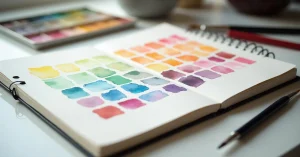
This chart becomes a reference for predicting glaze results in your paintings. Keep it in your studio.
Cause: Applying the glaze too aggressively, scrubbing with the brush, or applying to insufficiently dried paint.
Fix: Use a soft brush with light pressure. Single confident strokes. Ensure the base layer is completely dry. If using staining pigments in the base layer, this issue is reduced because staining pigments bond more firmly to the paper.
Cause: Using opaque pigments for glazing, or applying the glaze too thickly.
Fix: Use only transparent pigments. Dilute more than you think necessary. A glaze that looks almost invisible when wet will still shift the colour perceptibly when dry.
Cause: Uneven water distribution in the glaze layer creates edges where wet and dry zones meet.
Fix: Load the brush evenly and work in continuous, overlapping strokes. Do not let the edge dry before moving to the next stroke. Treat the glaze application like a flat wash over the glazed area.
On quality cotton paper, 8-12 layers is achievable without the paper surface deteriorating. On cellulose paper, 3-5 layers is a safer limit. The practical limit for most paintings is 3-6 layers, which provides substantial colour depth without overworking.
Yes. This deepens the value without changing the hue – useful for shadows and depth. Each successive layer of the same colour makes it progressively richer and darker.
No. You can apply glazes selectively – only over shadow areas, only in the background, or only in specific shapes. Selective glazing is how many painters create depth: the shadow sides of objects receive additional glaze layers while the lit sides retain fewer layers for lighter value.







WhatsApp us
 Login with Google