A well-organized workspace removes friction from painting. When everything is within reach and arranged logically, you spend your mental energy on creative decisions rather than searching for supplies or dealing with spills. Setting up does not require expensive furniture or a dedicated studio – even a kitchen table works well with the right approach.
Essential Supplies for Your Workspace
Before arranging your space, gather the basic supplies you need for a watercolor painting session:
- Paints: Your watercolor set or palette of individual colours
- Brushes: At minimum, a large wash brush, a medium round, and a small detail round. See our brush types guide for details
- Paper: Watercolor paper or a watercolor sketchbook
- Water containers: Two containers recommended – one for rinsing brushes, one for clean water
- Palette: If your paint set does not include mixing wells, a separate mixing palette (a white ceramic plate works perfectly)
- Paper towels or cloth: For blotting brushes and cleaning up
- Board: To tape paper to if using loose sheets
- Masking tape or artist’s tape: For securing paper to the board
Desk and Table Setup
Surface Requirements
Your painting surface needs to be stable, large enough for your paper plus supplies, and resistant to water damage (or protected with a plastic sheet or old towel). A desk, table, or countertop at comfortable sitting height works well. If your table surface is valuable, lay down a plastic tablecloth or large cutting mat.
Tilting Your Paper
Most watercolor techniques benefit from working on a slightly tilted surface (10-30 degrees from horizontal). Tilting allows gravity to pull washes downward in a controlled manner, which is essential for smooth flat washes and gradient effects.
Ways to tilt your paper:
- Prop one end of your board on a book or two
- Use a tabletop easel (adjustable angle is ideal)
- Rest the top of your board against a wall at a low angle
- Some artists use a drawing board with built-in tilt adjustment
For wet-on-wet work, you may want the paper completely flat so water does not run. Being able to quickly lay the board flat or tilt it gives you control over paint flow.
Layout for Right-Handed Painters
Arrange supplies based on hand dominance to avoid reaching across wet paint:
- Paper/board: Centre of your workspace
- Palette: Right side (painting hand side), slightly above the paper
- Water containers: Right side, behind the palette (further from you to avoid accidental knocking)
- Brushes: Right side, in a brush holder or laid on a towel
- Paper towels: Between the water containers and paper for quick access
- Reference image: Left side or above the paper at eye level
Left-handed painters mirror this arrangement: palette, water, and brushes on the left side.
Water Management
The Two-Jar System
Use two water containers rather than one:
- Rinse jar: For washing paint out of your brush between colours. This gets dirty quickly
- Clean water jar: For mixing fresh paint and wetting paper. Keep this water as clean as possible
Always rinse in the dirty jar first, then dip in the clean jar for fresh water. This simple habit keeps your paint mixes clean and your washes free from muddy contamination.
Dedicated artist water cups are designed with brush-friendly shapes and stable bases, but any glass or jar works. Wider containers are more stable and easier to rinse in than narrow ones.
Spill Prevention
- Place water containers on a separate towel or tray to catch spills
- Use heavy, wide-bottomed containers that resist tipping
- Keep water containers away from the edge of the table
- If using glass jars, transparent containers let you see how dirty the water is
Lighting
Why Lighting Matters
Poor lighting distorts colour perception. What looks like a perfect blue under warm tungsten light may appear greenish under daylight. Consistent, neutral lighting ensures the colours you mix and apply look the same when the painting is viewed elsewhere.
Ideal Lighting Setup
- Natural daylight: The best light source for colour accuracy. Position your desk near a window with indirect daylight (not direct sunlight, which creates harsh shadows and glare on wet paint)
- Daylight-balanced lamp: For evening painting or windowless rooms, use a lamp with 5000K-6500K colour temperature (labelled “daylight” or “cool white”). This closely mimics natural daylight
- Position: Light should come from the opposite side of your painting hand to avoid casting a hand shadow on your work. For right-handed painters, light from the upper left is ideal
Avoid These Lighting Mistakes
- Warm incandescent bulbs (2700K) that make yellows look natural and blues look dull
- Overhead fluorescent with green cast that distorts all colours
- Painting in deep shadow where you cannot see subtle colour differences
- Direct sunlight on your painting surface, which dries paint too fast and creates glare
Paper Preparation
Taping Paper to a Board
For loose sheets and lightweight sketchbook pages, secure the paper to a flat board:
- Place the paper on a clean, flat board (wooden board, foam board, or clipboard)
- Apply masking tape or artist’s tape along all four edges, overlapping the paper by about 1cm
- Press the tape firmly to create a seal that prevents water from seeping underneath
- When the painting is finished and dry, peel the tape slowly at a low angle to avoid tearing the paper
This serves two purposes: it prevents warping during painting and creates clean, crisp white borders around the finished piece.
Stretching Paper (for heavyweight techniques)
For heavy wet-on-wet work on lighter paper:
- Soak the paper in clean water for 5-10 minutes
- Lay the wet paper on a wooden board
- Staple every 3-5cm around all four edges while the paper is still wet
- Let it dry completely (several hours or overnight) before painting
- The paper dries taut and stays perfectly flat through any amount of water application
Palette Organization
If using a palette with separate wells (rather than a pan set), arrange colours logically:
- Group warm colours (yellows, oranges, warm reds) together
- Group cool colours (cool reds, blues, greens) together
- Keep earth tones (ochre, sienna, umber) in a separate grouping
- Leave the largest open area for mixing – this is more important than the colour wells
Consistent placement helps you reach for the right colour instinctively. See our beginner paint guide for recommended colour selections.
Workspace Tips for Small Spaces
You do not need a dedicated art room. Many painters work at kitchen tables, desks, or even lap desks on a sofa. Adaptations for small spaces:
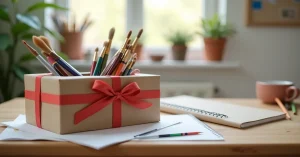
- Use a portable painting kit: Assemble everything in a box or bag that you set out when painting and pack away when finished
- Reduce footprint: A small palette, one water container instead of two, and a sketchbook instead of loose sheets minimises table space needed
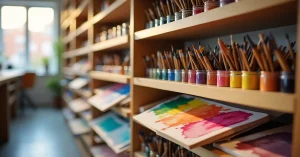
- Vertical storage: Store brushes upright in a jar or cup. Hang or shelf-store your paper and board when not in use
- Protect the surface: A large plastic cutting mat (available at sewing shops) provides a waterproof, self-healing surface that protects any table
Cleanup and Storage
After Each Session
- Rinse all brushes thoroughly in clean water until no colour runs out
- Reshape brush tips gently with your fingers
- Lay brushes flat or hang them tip-down to dry. Never store wet brushes upright (tip-up) as water collects in the ferrule and loosens the handle
- Empty and rinse water containers
- Wipe down your palette mixing area (but leave the paint wells – dried watercolor reactivates with water)
- Let paintings dry flat and away from direct heat or sunlight
Brush Care
Good brushes last years with proper care. The main enemies of watercolor brushes are:
- Paint dried in the ferrule (the metal part) – rinse thoroughly every session
- Storage with bent tips – store flat or hanging, never resting on the tip
- Moths and insects attracted to natural hair – store in a sealed container if not used for weeks
Accessories That Improve Your Workspace
These are not essential but make painting more comfortable and efficient:
- Spray bottle: For misting paper before painting, reactivating dried palette paint, and maintaining moisture during long wet-on-wet sessions
- Brush rest: Prevents brushes from rolling off the table and keeps tips off the surface
- Pencil: HB or 2B for light sketching before painting. Avoid pressing hard – pencil marks are difficult to erase under watercolor
- Eraser: Kneaded eraser for lightening pencil lines without damaging paper
- Hair dryer: For speeding up drying between layers when you are impatient (use on low heat, keep distance)
The One-Minute Setup Challenge
The best workspace is one you actually use. If setup takes too long, you will paint less often. Aim to get everything out and ready in under one minute. Pre-organize your supplies in a single container or tray that you can grab and go. The faster you can start painting, the more often you will paint.
Frequently Asked Questions
Do I need an easel for watercolor?
Not necessarily. Most watercolorists work on a flat or slightly tilted surface. A tabletop easel is convenient for keeping your paper at a consistent angle but a propped-up board works just as well. Vertical easels (like those used for oil painting) are generally not used for watercolor because wet paint runs down the surface.
Can I paint outdoors?
Absolutely. Outdoor (plein air) painting is a wonderful practice. You need a portable setup: a compact palette, a few brushes, a watercolor sketchbook or small board with paper, and a water container. Water brush pens eliminate the need for a water cup entirely.

 Login with Google