

Water brush pens are self-contained painting tools with a synthetic bristle tip and a built-in water reservoir in the barrel. You fill the barrel with water, squeeze gently, and water flows to the tip. This eliminates the need for a separate water cup while painting. But are they a genuine painting tool or just a novelty? This guide explains exactly how they work, what they are good at, and where they fall short.
A water brush pen has three parts: a synthetic brush tip (nylon fibres), a plastic barrel that holds water, and a screw-on cap. You unscrew the barrel, fill it with clean water, reattach the tip, and the water slowly wicks into the bristles. Squeezing the barrel pushes more water to the tip. Releasing the squeeze stops the flow.
There are several ways to apply colour with a water brush pen:
This is the number one advantage. A water brush pen eliminates the need for a water cup, making outdoor sketching, travel painting, and casual watercoloring dramatically simpler. Your setup becomes: sketchbook, a few pans of colour, and a water brush pen. No spill risk, no searching for a flat surface to place a water cup, no accidental kicks.
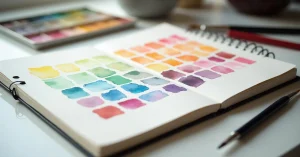
For quick sketches in a watercolor sketchbook, water brushes are unmatched. You can pull one out on a bus, at a cafe, or waiting in line. The barrier to painting drops to nearly zero when you do not need to set up a workspace.
The squeeze mechanism gives you precise control over how much water reaches the tip. For small-scale work and detailed areas, this control is useful. A light squeeze delivers just enough moisture to activate pigment without flooding small shapes.
Traditional painting requires changing your water cup as it gets dirty. With a water brush, the reservoir always contains clean water. This means cleaner colour mixing and no accidentally picking up muddy water for a delicate wash.
Water brush tips are made from synthetic nylon fibres. They lack the softness, snap, and water-holding capacity of natural hair brushes. The tip does not form as fine a point as sable, and it does not hold as much paint as squirrel or goat hair. For precision detail work or large, smooth washes, traditional brushes outperform water brushes significantly.
Laying a smooth, even flat wash with a water brush pen is difficult. The tip does not hold enough paint for continuous coverage, and the water delivery via squeezing is less consistent than dipping a loaded brush into a paint-water mixture. For washes larger than a few centimetres, traditional brushes are clearly better.
Squeezing control takes practice. New users often squeeze too hard, flooding the paper with water and creating unwanted blooms and backruns. The opposite problem – not enough water reaching the tip – makes colours appear scratchy and dry. Finding the right squeeze pressure is a learned skill.
With a traditional brush, you load paint by dipping into a rich mixture on your palette. You control exactly how much pigment the brush carries. With a water brush, you are limited to what you can pick up by touching the tip to a pan. This means less pigment per stroke and less colour intensity, especially with colours that require heavy loading.
Switching colours requires squeezing water through the tip to flush out the previous colour, then wiping on tissue or cloth. This is slower than swishing a traditional brush in water and less effective at truly cleaning the tip. Residual colour from previous use can contaminate the next colour.
Water brush pen sets typically include multiple tip sizes:
If buying a single water brush for testing, start with the medium tip. It handles the widest range of tasks.
Practice squeezing on scrap paper first. The goal is to learn the minimum squeeze needed to keep the tip moist without flooding. Most of the time, the capillary action of the synthetic fibres wicks enough water to the tip without any squeezing at all.
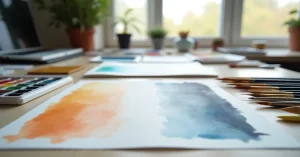
Water brush pens work best on proper watercolor paper. On thin or absorbent paper, the water spreads uncontrollably. On watercolor paper, especially 300gsm, the water stays where you put it.
Because each stroke carries less pigment than a loaded traditional brush, build colour intensity through multiple passes. Let each layer dry before adding the next. This layered approach actually produces beautiful, luminous results.
Wiping the tip on tissue between colour changes and to control excess water is essential. This is your primary cleaning and control tool.
While it is tempting to fill the barrel with diluted watercolor or ink, cleaning the barrel thoroughly afterwards is very difficult. Residual pigment will contaminate future colours. Use the barrel for water only.
Water brush pens are inexpensive. A set of multiple sizes costs less than a single quality sable round brush. This makes them excellent additions to your toolkit even if you primarily use traditional brushes. Having a water brush pen in your bag means you are always prepared to paint, even when your full setup is at home.
For casual sketching and learning, yes. For developing serious painting skills and producing finished artwork, no. You will eventually need traditional brushes for techniques that water brushes cannot handle, particularly large washes and wet-on-wet work.
Synthetic tips are durable but will gradually lose their point over months of regular use. Quality refillable water brushes can last a year or more with normal use. The barrel and reservoir mechanism outlast the tip.
Yes. Squeeze tube paint onto a palette, add a touch of water to activate it, and pick up colour with the water brush tip. This works well for travel setups where you do not want to carry pan sets.
They are good for getting beginners started painting quickly with minimal setup. However, beginners should also practice with traditional brushes and a water cup to develop proper brush loading and water control skills.



WhatsApp us
 Login with Google