Watercolor paper comes in three main formats: glued pads, watercolor blocks, and loose sheets. Each format has a different approach to the fundamental problem of watercolor paper – it buckles and warps when wet. The format you choose affects your painting experience, convenience, and results just as much as the paper weight and texture you select.
This guide compares all three formats so you can decide which best suits your painting style, budget, and working conditions.
The Core Problem: Paper Warping
When watercolor paper absorbs water, the wet fibres expand while dry fibres stay the same size. This uneven expansion causes the paper to buckle, warp, and create valleys where water pools. Thinner paper warps more dramatically. The three paper formats each address this problem differently:
- Pads: Do not prevent warping – the paper buckles freely
- Blocks: Glued on all four edges to resist warping
- Loose sheets: The painter stretches or tapes them to a board to prevent warping
Watercolor Pads (Glue-Bound)
What They Are
A watercolor pad is a stack of sheets bound on one edge with adhesive, similar to a notepad. You paint on the top sheet, then tear it off when finished. The sheet is free on three sides and only attached at the top or side edge.
Advantages
- Most affordable: Pads offer the lowest cost per sheet across most brands, especially at lower paper weights
- Convenient: Grab a pad and start painting immediately. No preparation needed
- Portable: Easy to carry in a bag for outdoor painting or classes
- Easy to tear sheets: Perforated or glue-bound edges make removing finished paintings simple
- Wide availability: The most common format, available from every brand
Disadvantages
- Significant warping: Because only one edge is attached, the paper buckles freely when wet. This is the biggest limitation of pads
- Water pooling: Buckled paper creates valleys where water collects, making washes uneven
- Difficult wet techniques: Heavy washes and wet-on-wet techniques suffer most from warping because they use the most water
- Lower weights common: Many budget pads use 200gsm or lighter paper, which warps severely
Products like the Baohong Academy pad are popular because their 300gsm cotton paper resists warping better than lighter alternatives, even in pad format.
Who Pads Work Best For
Beginners, students, and painters who work mainly with controlled techniques (dry brush, light washes). Also ideal for practice sessions where you want to paint quickly without setup time.
Watercolor Blocks
What They Are
A watercolor block is a stack of sheets glued on all four edges, leaving only a small gap on one side where you insert a palette knife to separate the finished sheet. Because the paper is restrained on all sides, it cannot buckle or warp while painting – the glue acts like stretching tape.
Advantages
- Minimal warping: The four-edge binding prevents almost all buckling. This is the primary benefit
- No preparation needed: Unlike loose sheets, you do not need to stretch, tape, or staple the paper. It is ready to paint immediately
- Excellent for wet techniques: Heavy washes, wet-on-wet technique, and large colour areas stay flat and even
- Built-in support: The stack of sheets beneath your working sheet provides a firm, rigid painting surface
- Portable: Compact and self-contained – no need for a separate board
Disadvantages
- More expensive: Blocks cost more per sheet than the equivalent pad because of the four-edge binding
- Must wait for drying: You should let the painting dry completely before removing it from the block. Removing a wet sheet causes it to buckle immediately
- Only one surface at a time: You can only paint on the top sheet. If you want to work on multiple paintings in a session, you need multiple blocks or must wait between paintings
- Removing sheets requires care: You need a palette knife or thin blade to separate the sheet from the glue without tearing
Who Blocks Work Best For
Painters who use wet techniques regularly but want the convenience of not stretching paper. Plein air painters who need portability plus flat painting surfaces. Anyone frustrated by warping in pads.
Loose Sheets
What They Are
Individual, unbound sheets of watercolor paper. Sold as single sheets, packs, or cut from large rolls. To use them, you typically tape or stretch them onto a rigid board before painting.
Advantages
- Best value for premium paper: Full sheets (typically 56 x 76 cm) offer the lowest cost per square centimetre, especially for professional-grade cotton paper
- Custom sizes: Cut sheets to any size you need. Make tiny studies from one corner and large paintings from the rest
- Flattest painting surface: When properly stretched (soaked and stapled to a board), the paper becomes drum-tight and stays completely flat through any amount of water
- Full deckle edge: Premium sheets have natural deckle (uncut) edges on all four sides, valued for framing and presentation
- Both sides usable: No glue on any edge means both sides of the paper are available for painting
Disadvantages
- Requires preparation: Stretching paper takes 15-30 minutes plus drying time. Taping is faster but less effective for very wet techniques
- Needs a board: You need a wooden board, gator board, or similar rigid surface
- Less convenient: More setup and cleanup compared to pads and blocks
- Can be wasteful: Cutting large sheets sometimes leaves odd-sized scraps
- Harder to find: Not all art stores stock loose sheets, especially in Sri Lanka
Who Loose Sheets Work Best For
Experienced painters who work at various sizes, professional artists who need archival quality and cost efficiency, and anyone working on large-format paintings where pads and blocks are not available.
Format Comparison Table
| Factor |
Pad |
Block |
Loose Sheet |
| Warping resistance |
Poor |
Excellent |
Excellent (when stretched) |
| Convenience |
High |
High |
Low (requires preparation) |
| Cost per sheet |
Lowest |
Moderate |
Lowest for premium paper |
| Portability |
Excellent |
Good |
Requires board |
| Wet technique suitability |
Limited |
Good |
Excellent (stretched) |
| Setup time |
None |
None |
15-30 minutes |
| Size flexibility |
Fixed sizes |
Fixed sizes |
Any size |
| Best for |
Practice, dry techniques |
Wet techniques, travel |
Serious work, large sizes |
How Paper Weight Interacts with Format
The weight of your paper determines how much each format matters:
- 160gsm or lighter: Warps severely in any format. Must be stretched if using loose sheets. Pads at this weight are frustrating for wet work
- 200gsm: Moderate warping. Blocks handle this weight well. Pads are acceptable for light techniques
- 300gsm: Minimal warping. Works well in all three formats. Pads at 300gsm (like Baohong Academy pads) are practical even for moderately wet techniques
- 640gsm: Almost no warping in any format. Behaves like cardboard. Stretching is unnecessary
If you buy 300gsm paper in pad format, the warping issue is manageable for most techniques. But if you only have access to 200gsm paper and want to do wet washes, a block or stretched loose sheet makes a meaningful difference.
Paper Texture Across Formats
All three paper textures – cold press, hot press, and rough – are available across pad, block, and loose sheet formats. The texture choice is independent of the format choice. Cold press remains the most versatile and popular texture for beginners regardless of which format you buy.
Tips for Working with Each Format
Getting the Most from Pads
- Choose 300gsm whenever possible to minimise warping
- Tape all four edges of the top sheet to a board with masking tape before painting
- Work with less water if using lightweight pad paper
- Favour wet-on-dry techniques and controlled applications
Getting the Most from Blocks
- Let paintings dry completely before removing from the block
- Use a thin palette knife at the gap to separate sheets – insert at an angle and slide gently
- If the block gets too wet and sheets start lifting at the edges, press them back down with a clean cloth
Getting the Most from Loose Sheets
- For quick taping: use artist’s tape on all four edges, pressing firmly. Works for moderate wetness
- For full stretching: soak the sheet for 5-10 minutes, lay on a wooden board, staple every 3-5 cm around all edges. Let dry completely before painting
- Cut sheets with a metal ruler and craft knife for clean edges
Which Format Should You Start With?
For beginners in Sri Lanka, a 300gsm cold press pad offers the best balance of convenience, affordability, and usability. Once you are comfortable with watercolor basics and want to explore heavier wet techniques, consider trying a block or learning to stretch loose sheets.
Many experienced painters use all three formats depending on the situation: pads for quick studies, blocks for finished smaller pieces, and stretched sheets for important or large works.
Frequently Asked Questions
Can I flatten warped paintings from a pad?
Yes. Once completely dry, place the painting between two clean sheets of paper, stack heavy books on top, and leave for 24-48 hours. The paper flattens considerably. You can also lightly mist the back with water, place between blotting paper, and press flat under weight.
Is cotton paper available in all formats?
Yes, though cotton paper is more commonly available as loose sheets and blocks in professional ranges. Cotton pads exist (Baohong Academy is one example) but are less common than cellulose pads at budget price points.
Can I use a sketchbook instead of a pad?
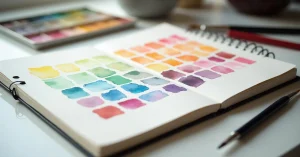
Watercolor sketchbooks are essentially bound pads with covers. They work similarly to pads for warping – pages can buckle. The advantage is portability and having all your paintings together in one book.




 Login with Google