

Watercolor paint is a water-soluble medium made from finely ground pigment suspended in a binder – typically gum arabic. When you add water, the binder dissolves and carries the pigment across your paper. As the water evaporates, the pigment particles settle into the paper fibres, creating a transparent layer of colour.
This transparency is what makes watercolor unique among painting mediums. Unlike acrylics or oils that sit on top of the surface, watercolor lets the white of your paper shine through. Your paper effectively becomes your lightest value – which is why choosing the right paper matters just as much as choosing the right paint.
Every watercolor mixture has three ingredients working together:
Understanding this chemistry helps explain why some paints feel smooth and cooperative while others feel gritty or stubborn. It is not magic – it is materials science you can learn.
Pans are dried blocks of watercolor paint that sit in a palette. You activate them by rubbing a wet brush across the surface. They come in two sizes:
Best for: travel painting, urban sketching, controlled detail work, and beginners who want a tidy setup.
Limitation: loading a large wash brush takes patience. If you are painting big skies or broad backgrounds, you will find yourself scrubbing the pan repeatedly. For a deeper comparison, read our dedicated pans vs tubes guide.
Tubes contain moist watercolor paste that you squeeze onto a palette. The consistency is similar to thick cream. You can dilute it with water to any strength you want.
Best for: large washes, studio painting, mixing generous puddles of colour, and artists who want maximum pigment intensity.
Tip: you can squeeze tube paint into empty pans and let it dry. It becomes a pan. So tubes give you the most flexibility.
Liquid watercolors come in dropper bottles as a highly concentrated, ready-to-use solution. They produce extremely vivid, saturated colour.
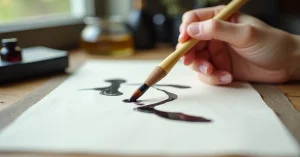
Best for: illustration, calligraphy, bold effects, and mixed media work.
Caution: many liquid watercolors use dyes rather than pigments, which means they may not be lightfast (colours can fade in sunlight over time). Check the label if permanence matters for your work.
This is one of the most common questions beginners ask. The difference comes down to pigment concentration and purity:
For beginners in Sri Lanka, good student-grade paints like Winsor and Newton Cotman or Sinours Professional are the sweet spot – reliable enough to learn properly without breaking your budget.
As you progress beyond the basics, understanding these properties will help you make better colour choices:
Transparent pigments let underlying layers show through. Opaque pigments cover what is beneath them. For watercolor’s signature luminous quality, transparent pigments are generally preferred – but opaque colours have their uses for deliberate coverage.
Lightfastness measures how resistant a pigment is to fading when exposed to light. Ratings typically run from I (excellent) to IV (poor). If you plan to frame and display your paintings, choose pigments rated I or II.
Some pigments naturally separate into tiny particles that settle into the paper’s texture, creating a beautiful speckled or grainy effect. Granulating colours are prized for painting stone textures, stormy skies, and organic surfaces. Daniel Smith and Schmincke are known for their granulating pigments.
Staining pigments bond permanently to paper fibres – once dry, they resist being lifted off. Non-staining (lifting) pigments sit more loosely on the surface and can be partially removed with a damp brush. Knowing this helps when you need to correct mistakes or create highlights by lifting colour.
You do not need 48 colours to start painting. A well-chosen palette of 6-12 colours will serve you better than a huge set of mediocre paints. The classic approach is a split primary palette:
Add one or two earth tones – Yellow Ochre and Burnt Sienna cover most natural subjects from tree trunks to Sri Lankan temple walls.
Yes. Because gum arabic is water-soluble, dried watercolor paint (including tube paint that has dried on your palette) can be reactivated with water. This is one of watercolor’s most practical advantages – zero waste.
Not necessarily. Good student-grade paints behave predictably enough to learn proper technique. The jump to professional grade matters most when you want cleaner mixes, stronger colour intensity, and archival permanence.
Gouache uses the same basic ingredients but includes white pigment or chalk to make it opaque. Watercolor is transparent; gouache is matte and opaque. Many artists use both in the same painting.
No. Start with whichever format suits your painting style better. You can always squeeze tubes into empty pans later if you want both options.
You can browse our curated selection at Watercolor.lk, or visit local art stores in Colombo and Negombo. We stock brands tested for Sri Lankan conditions and deliver islandwide.
Now that you understand what watercolor paint is and how it works, explore our guides on choosing the right paper and finding a good sketchbook to complete your setup.



WhatsApp us
 Login with Google