

Chinese calligraphy brushes are among the most versatile painting tools you can own, yet most Western watercolorists never try them. Designed over centuries for ink work, these brushes bring unique capabilities to watercolor painting that conventional round or flat brushes cannot replicate. If you want expressive line variation, exceptional water holding, and a different creative feel, a Chinese brush deserves a place in your collection.
Unlike Western watercolor brushes designed for consistent, predictable strokes, Chinese brushes are built for dynamic variation within a single stroke. The construction philosophy is fundamentally different:
Made from weasel, horse, or other firm hairs. These produce crisp, defined strokes with excellent control. Best for detail work, outlines, and precise line variation. They hold less water than soft brushes but offer more spring and snap.
Made from goat or rabbit hair. These hold enormous amounts of water and produce soft, flowing strokes ideal for washes and broad areas. They have less point control but excel at expressive, gestural painting.
Combine firm inner hairs with soft outer hairs, offering the best of both worlds. These are the most versatile for watercolor painting. The Sicon Chinese Brush TT05 is an excellent example of a mixed brush that works beautifully for both calligraphic strokes and watercolor painting.
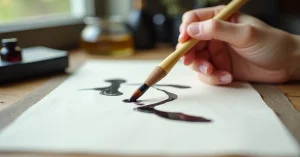
The defining feature. Press lightly with just the tip for hairline strokes. Press harder to engage the belly for broad marks. A single continuous stroke can transition from thin to thick and back again. Western round brushes can do this to a degree, but Chinese brushes offer far greater range and responsiveness.
A large Chinese brush can lay down a wash nearly as wide as a dedicated wash brush, then immediately transition to fine detail work. With a Western brush set, you would need to switch from a wash brush to a small round – losing time and momentum.
When loaded with minimal water, the split-hair construction of Chinese brushes creates beautiful, ragged dry brush effects. The multiple hair types separate at different points, producing organic texture that is difficult to achieve with a uniform synthetic brush.
Held upright in the traditional manner, Chinese brushes naturally produce calligraphic, energetic strokes. For loose floral painting, bamboo subjects, landscape elements like trees and grasses, and any subject where expressive brushwork is valued, these brushes shine.
The traditional grip differs from Western brush holding:
This grip takes practice but rewards you with greater freedom of movement and more dynamic strokes. You can also hold a Chinese brush in a Western grip if you prefer – you will still benefit from the brush construction, just with less traditional stroke character.
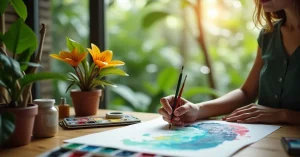
Load the brush with two or three colours at once (tip in dark colour, belly in light colour). Each petal forms in a single press-and-lift stroke, with natural colour gradation built in. This is the quintessential Chinese brush watercolor technique.
Trees, rocks, grasses, and water reflections all benefit from the expressive line variation. Use the tip for branches, the belly for trunks, and dry brush strokes for bark texture.
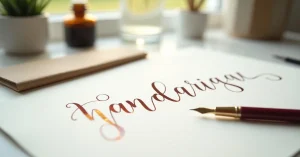
If you add hand-lettered text or decorative calligraphy to your watercolor paintings, these brushes are designed precisely for that purpose.
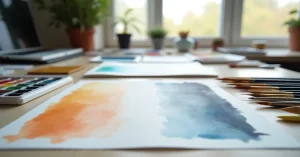
Large Chinese brushes hold enough water for small flat washes and gradient washes, and the pointed tip means you can work right up to edges that a flat wash brush would struggle with.
| Task | Chinese Brush | Western Brush |
|---|---|---|
| Line variation in one stroke | Far superior | Limited range |
| Consistent, even lines | Harder to control | Better suited |
| Large flat washes | Good (large sizes) | Better (flat/mop brushes) |
| Precise botanical detail | Possible but less predictable | More consistent |
| Expressive, gestural work | Unmatched | Can feel stiff |
| Dry brush textures | Excellent variety | Good but uniform |
| Travelling/plein air | One brush covers many tasks | Need multiple brushes |
The ideal setup combines both. Use Chinese brushes for expressive work, loose painting, and subjects that benefit from dynamic strokes. Use Western brushes for controlled detail, precision, and large uniform washes.
A medium mixed-hair brush (jian rou) is the best starting point. It offers enough versatility to explore all the techniques above without committing to a specialised hard or soft brush before you know your preference. Look for a brush head roughly 25-30mm long with a good point when wet.
The Sicon Chinese Brush TT05 is an excellent entry point – it combines firm and soft hairs for versatile watercolor work while remaining affordable enough to experiment with a new tool.
Most Chinese brushes work with watercolor. Brushes designed for painting (as opposed to very small calligraphy-only brushes) are most suitable. Avoid extremely large brushes intended for poster-scale writing unless you paint very large.
Yes. Load colour from your palette exactly as you would with a Western brush. Chinese brushes work equally well with both pans and tubes.
With proper care, a good Chinese brush lasts years. Natural hair eventually wears, but the thick bundles in Chinese brushes contain enough hair that gradual loss does not affect performance quickly. The bamboo handle outlasts the hair easily.

WhatsApp us
 Login with Google