

The format of your watercolor paint – pans or tubes – directly affects which brushes work best and how you use them. A brush that performs beautifully loading from a palette of tube paint may frustrate you when trying to activate a dry pan. Understanding the interaction between paint format and brush type helps you get the most from both.
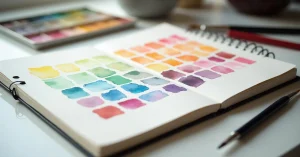
Pans contain dried watercolor that must be activated with water before use. You wet your brush, then rub it on the surface of the pan to dissolve pigment. The brush needs to work the surface to load enough colour. This is a physical process – you are essentially scrubbing pigment into your brush.
Tubes contain moist, paste-like watercolor. You squeeze paint onto a palette, add water to dilute, and load your brush from the wet puddle. The brush dips into ready-made paint rather than having to activate it. Loading is passive – touch the brush to the paint puddle and it absorbs colour.
Activating dry pan paint requires some scrubbing action. Extremely soft brushes (pure squirrel, soft goat hair) struggle to dissolve pan pigment because they do not have enough spring to agitate the surface. When you press a very soft brush against a pan, the bristles fold over without generating friction.
Synthetic brushes and sable/synthetic blends have moderate stiffness that works well for pan activation. The bristles maintain their shape under light pressure, generating enough friction to dissolve the paint surface effectively.
Rubbing a fine-tipped brush against the hard surface of a pan wears the tip faster than loading from a wet palette. If you use pans regularly, your detail round brushes will lose their sharp point more quickly than if you used tubes.
To minimise tip wear, use a dedicated activating brush (an inexpensive synthetic round) to scrub the pan and transfer dissolved pigment to your palette mixing area. Then load your painting brush from the palette, not directly from the pan. This preserves the tips of your quality brushes.
Pans are small, typically 15x23mm (half pan) or 23x30mm (full pan). Loading a large wash brush directly from a pan is impractical – the brush does not fit on the small surface. For large-area painting with pans, you need to:
This extra step is one reason flat washes are easier with tube paints – you can prepare a large quantity of mixed paint quickly.
Because tube paint is already wet and only needs to be picked up (not activated), any brush type loads colour effectively from a palette. This means the full range of brush options is available to you: ultra-soft squirrel mops, delicate sable rounds, stiff synthetics, and everything in between.
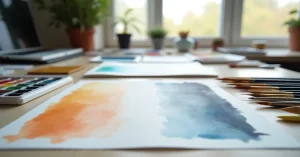
Tube paints paired with soft brushes produce the smoothest washes. A squirrel mop or squirrel wash brush dipped into a diluted tube paint mixture picks up enormous amounts of colour and lays it down in flowing, even strokes. This combination is ideal for large background washes, skies, and wet-on-wet work.
Tubes let you create highly concentrated paint puddles on the palette. For techniques requiring heavy pigment loading – intense colour applications, direct painting, thick marks – brushes of any type can pick up far more pigment from a tube paint puddle than from a pan surface.
Consider painting a landscape with a blue sky, green foliage, and warm earth:
Activate blues, greens, and earth tones. Transfer dissolved pigment to palette wells. Mix on the palette. Load brushes from the mixing area. The process is slower but portable and self-contained. Budget pan sets like Sinours work well for learning and practice.
Squeeze out blues, yellows, and earth tones onto the palette. Add water to each puddle. Mix large quantities of each colour needed. Load brushes directly from rich, wet paint. The process is faster for preparing paint but requires more setup and is less portable. Individual tubes like Winsor and Newton Cotman offer higher pigment concentration.
| Situation | Suggested Format | Best Brush Pairing |
|---|---|---|
| Travel/outdoor painting | Pans | Water brush pens, synthetic rounds |
| Sketchbook journaling | Pans | Water brush, small synthetic round |
| Large studio paintings | Tubes | Squirrel mop, sable/blend rounds |
| Detailed botanical illustration | Tubes | Sable or fine synthetic rounds |
| Beginners learning basics | Either | Synthetic round (size 8-10) |
| Wet-on-wet technique practice | Tubes | Large mop or wash brush |
| Budget-conscious practice | Pans | Synthetic brushes (affordable, durable) |
Yes. Many artists squeeze tube paint into empty half pans and let it dry. This gives you the convenience of a pan set with the pigment quality of tube paints. The dried tube paint reactivates with water just like manufactured pans. This is a popular approach for building a custom palette from individual tubes.
No. Most painters use the same brushes for both formats. However, understanding that soft brushes perform better with tubes and stiffer brushes handle pans more effectively helps you choose appropriately for each session.
Tubes allow heavier pigment loading because the paint is already wet and concentrated. For maximum colour intensity – especially for rich colour mixes and saturated washes – tubes have a clear advantage. Pans can produce equally vibrant colour with patience and proper activation, but the process requires more effort per stroke.

WhatsApp us
 Login with Google