

A good wash brush is one of the most important tools in watercolor painting. It needs to hold enough water and pigment to lay down smooth, even washes across large areas without running dry mid-stroke. Natural squirrel hair is widely considered the best material for this purpose, and the ArtSecret squirrel hair wash brush is one of the most accessible options in Sri Lanka.
I have used this brush extensively for flat washes, gradient washes, and large wet-in-wet passages. Here is what I found.
Squirrel hair is a natural hair fibre with unique properties that make it ideal for watercolor wash work. The individual hairs are exceptionally soft and have microscopic scales along their surface that trap and hold water. A well-made squirrel brush can hold 3-5 times more water than a synthetic brush of the same size.
This water-holding capacity is the key advantage. When you load a squirrel wash brush and draw it across your paper, the brush releases water and pigment in a steady, controlled flow. You can cover large areas in a single continuous stroke without reloading – critical for achieving smooth, streak-free washes.
The softness of squirrel hair also means the brush does not disturb paint that is already on the paper. When painting flat washes or glazing over dried layers, the delicate fibres glide across the surface without lifting underlying colour.
This is the primary test for any wash brush, and the ArtSecret passes convincingly. The squirrel hair belly absorbs a generous amount of pigmented water – enough to cover a full A4-width stroke without reloading. For larger paper like A3, you need 2-3 loads per horizontal pass, which is typical for this brush size.
Compared to synthetic flat brushes of the same width, the water-holding difference is immediately obvious. A synthetic brush begins to streak and run dry after roughly one-third of the same distance. This is the fundamental reason professional watercolorists prefer natural hair for wash work.
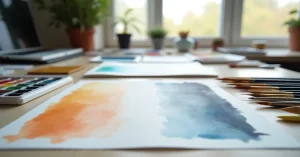
Excellent. The brush lays down even, consistent colour across its full width. The soft fibres distribute paint smoothly without leaving brush marks or streaks. When working on cotton paper, where the surface stays wet longer, you can build perfectly even flat washes by overlapping each stroke slightly into the wet edge of the previous one.
The consistency of the colour deposition is where squirrel hair outperforms synthetic alternatives most dramatically. Because the brush releases water at a steady rate rather than in an initial flood followed by rapid drying, the resulting wash has uniform density from beginning to end.
Very good. Gradient washes require progressively diluting the pigment while maintaining smooth, streak-free coverage. The ArtSecret’s water-holding capacity gives you enough time between reloads to blend smoothly from dark to light. The soft fibres do not disturb the drying edge, which is essential for seamless gradients.
The brush handles both dark-to-light and colour-to-colour gradients effectively. For best results, tilt your paper at approximately 15-20 degrees and work with gravity, allowing a small bead of water to form at the bottom edge of each stroke.
The brush works well for applying initial wet-in-wet washes. The soft fibres lay down a uniform wet layer without scrubbing the paper surface. When dropping colour into wet areas, the flat shape allows you to control exactly where pigment lands.
However, this is a flat wash brush – it is not designed for the kind of expressive, variable-width strokes that a round brush provides. For detailed wet-in-wet work, pair it with a good round brush for dropping and charging colour.
The flat profile gives you two distinct edge types. The broad face produces wide strokes with soft edges – ideal for sky washes, backgrounds, and large areas. The thin edge (when turned sideways) produces surprisingly fine lines for a brush this size, useful for horizon lines and architectural edges.
The corners of the brush maintain reasonable sharpness, allowing you to cut around shapes with moderate precision. For tight, detailed cutting-in work, a smaller synthetic flat would be more precise, but for general wash work the edge control is more than adequate.
Squirrel hair is softer than other natural hairs like sable or hog bristle, which means it wears faster under heavy use. After several months of regular painting, you may notice the tips becoming slightly less defined. This is normal for squirrel hair brushes at any price point.
Proper care extends the life significantly. Always rinse thoroughly after each session, reshape the bristles while damp, and store flat or hanging. Never leave a squirrel brush standing upright in water – the ferrule will rust and the glue holding the bristles will dissolve.
This brush is for watercolorists who are ready to upgrade their wash technique. If you have been using a synthetic flat brush for washes and find yourself constantly fighting with streaks, dry spots, and uneven coverage, a squirrel hair wash brush will transform your results.
It is particularly valuable if you paint subjects that require large, smooth passages of colour – skies, water reflections, backgrounds, and flat wash foundations. Combined with a quality round brush for detail work, the squirrel flat covers most painting situations.
Complete beginners may want to start with a basic synthetic brush set first and add a squirrel wash brush once they understand basic watercolor techniques and feel the limitation of synthetic brushes during wash work.
The ArtSecret squirrel hair wash brush delivers the core promise of natural hair: genuinely superior water-holding capacity that produces smoother, more even washes than any synthetic alternative. At its price point, it is the most accessible way for Sri Lankan watercolorists to experience the difference that quality natural hair makes.
It has the expected limitations – soft fibres without snap, moderate durability, single-purpose design. But within its intended role as a wash brush, it performs excellently. If you paint regularly and value smooth washes, this is a worthwhile investment.
Yes. Dilute tube paint to a wash consistency and load the brush by stroking it through the puddle of diluted colour. The squirrel hair picks up liquid pigment easily regardless of whether the original format is pan or tube.
For wash-specific work, squirrel hair holds more water than sable and is softer, making it better for large-area coverage. Sable has more spring and a finer point, making it better for detailed and versatile work. They serve different purposes.
Rinse in clean water after each session until the water runs clear. Reshape the bristles with your fingers while damp. Never use soap or solvents. Store flat or hanging with bristles pointed down. Avoid leaving brushes in water.
Yes, though you will see the biggest improvement on cotton paper. Cotton paper stays wet longer, allowing you to exploit the brush’s water-holding capacity fully. On cellulose paper, the faster drying time means you still need to work quickly, but washes will be smoother than with synthetic brushes.

WhatsApp us
 Login with Google