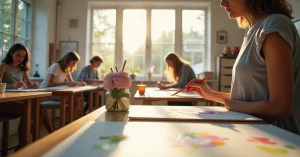

You have decided to start watercolor painting. Now comes the overwhelming part – what do you actually need to buy? Walk into any art supply shop and you will find hundreds of products. Most of them you do not need. Some of them you definitely do.
This guide is your complete shopping list. Every item is chosen for a reason, with specific products available in Sri Lanka through Watercolor.lk. No guesswork, no wasted money on things you will not use.
These six categories form your core kit. Everything else is optional. Get these right and you can paint anything a beginner should be painting.
Start with a student-grade set of 12-14 colours. This gives you all the primaries, secondaries, and earth tones you need. You will learn colour mixing faster with a limited palette than with 48 colours you never learn to use properly.
Choosing format: Paint comes in two forms – pans (small dry blocks of paint) and tubes (moist paint in metal tubes). For beginners, pan sets are more convenient because they come in a portable box with a built-in mixing palette. Read our detailed comparison of the best watercolor paints for beginners in Sri Lanka.
Budget tip: a good 12-colour student set (Rs 1,500-3,500) will take you through your entire first year of painting. Upgrading individual colours to professional grade later is easy – you do not need to buy everything professional from the start.
This is the single most important material in your kit. Bad paper ruins good technique. Good paper makes even beginner work look better.
What to buy: 300 GSM cold-pressed watercolor paper. The 300 GSM weight means it will not buckle or warp badly when wet. Cold-pressed texture provides a nice balance of smoothness and tooth (surface texture) for all techniques.
Read how to select the best watercolor paper for a full breakdown, and our GSM comparison guide to understand why weight matters.
Format options:
Browse the full watercolor paper collection.
Three brushes is all a beginner needs. Seriously. Professional painters often complete entire paintings with just two or three brushes.
Your starter trio:
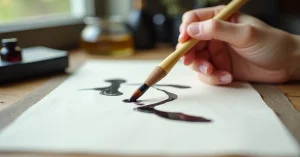
Optional extras: A Chinese calligraphy brush for expressive mark-making, and a set of water brush pens for outdoor sketching.
You need two water containers: one for rinsing your brush (the dirty water) and one for mixing clean water with paint. Using only one cup means your colours get muddied faster.
The Sketchers Water Cup TT24 has a practical design with brush rest slots and an anti-spill lid – far better than a random glass from the kitchen (which you WILL knock over eventually).
At-home alternative: two jam jars work perfectly. The dedicated water cup matters more when you paint outdoors or at a desk where spills are catastrophic.
A palette is where you mix your colours. You need flat mixing areas large enough to make generous puddles of diluted paint.
Options:
Essential for controlling water on your brush. Before every stroke, you decide how wet your brush should be — and you control this by touching the loaded brush to a paper towel or rag to blot off excess water.
Old cotton T-shirts cut into squares make excellent painting rags. They are free, absorbent, and reusable. Keep several within arm’s reach while painting.
These are not essential for day one, but they improve your painting experience significantly. Add them to your kit as you progress.
Used to tape paper to a board. Creates clean edges on your paintings and prevents paper from buckling. Any low-tack masking tape works – artist tape is gentler on paper but regular masking tape from a hardware shop is fine for practice.
A fine mist spray bottle serves two purposes: keeping your palette paints moist during a session, and wetting large areas of paper quickly for wet-on-wet techniques. Essential in Sri Lankan heat where paint dries faster.
A smooth, waterproof board to tape your paper to. A piece of sealed plywood, a melamine clipboard, or even a large cutting board works. The board keeps your paper flat and allows you to tilt your painting surface at an angle.
An HB or 2B pencil for light preliminary sketching. Draw lightly – watercolor is transparent, so heavy pencil lines will show through your paint. A kneaded eraser (which lifts graphite without damaging paper) is better than a standard rubber eraser.
| Item | Priority | Estimated Cost (LKR) |
|---|---|---|
| 12-14 colour watercolor paint set | Essential | 1,500 – 3,500 |
| 300 GSM watercolor paper pad/block | Essential | 800 – 2,000 |
| Round brush size 8-10 | Essential | 300 – 800 |
| Round brush size 4-6 | Essential | 250 – 600 |
| Wash brush 1 inch+ | Essential | 400 – 1,200 |
| Water cups (x2) | Essential | 200 – 500 |
| Mixing palette | Essential | 0 (use pan set lid or plate) |
| Paper towels / rag | Essential | 0 (old cloth from home) |
| Masking tape | Recommended | 150 – 300 |
| Spray bottle | Recommended | 200 – 400 |
| Drawing board | Recommended | 0 – 500 (or use existing board) |
| HB/2B pencil | Recommended | 50 – 100 |
| Water brush pen set | Optional | 500 – 1,200 |
| Watercolor sketchbook | Optional | 700 – 2,500 |
Total for essentials only: approximately Rs 3,500 – 8,500
Total with recommended extras: approximately Rs 4,000 – 10,000
Total with everything: approximately Rs 5,000 – 13,000
Everything in this guide is available at Watercolor.lk, Sri Lanka’s dedicated watercolor art supply store. We offer islandwide delivery so you do not need to hunt through multiple shops in Colombo.
Browse by category to build your kit:
For pencils, erasers, tape, and paper towels – absolutely. For paint, paper, and brushes – buy from a proper art supply source. General stationery-grade “watercolors” and “drawing paper” are not designed for real watercolor techniques and will frustrate you.
Building your own gives better value because you choose quality where it matters most (paper) and save where it matters less (accessories). Pre-made kits often include things you do not need while skimping on essentials.
A set of watercolour paints (any 12-colour set), one round brush (size 8), one sheet of 300 GSM watercolour paper, a cup of water, and a tissue. That is it. Start painting, learn what you like, then build your kit around your needs.
A 12-colour pan set typically lasts 6-12 months of regular practice painting. Paper is the fastest consumable – a 20-sheet pad lasts 1-3 months depending on frequency. Brushes last years with proper care.
Ready to start? Read our beginner paint guide, choose your paper, and start painting. Your first painting will not be perfect – and that is exactly how it should be.
WhatsApp us
 Login with Google